You have no items in your shopping cart.

Tides & Taps: Hatchling Season Is On in Delray Beach

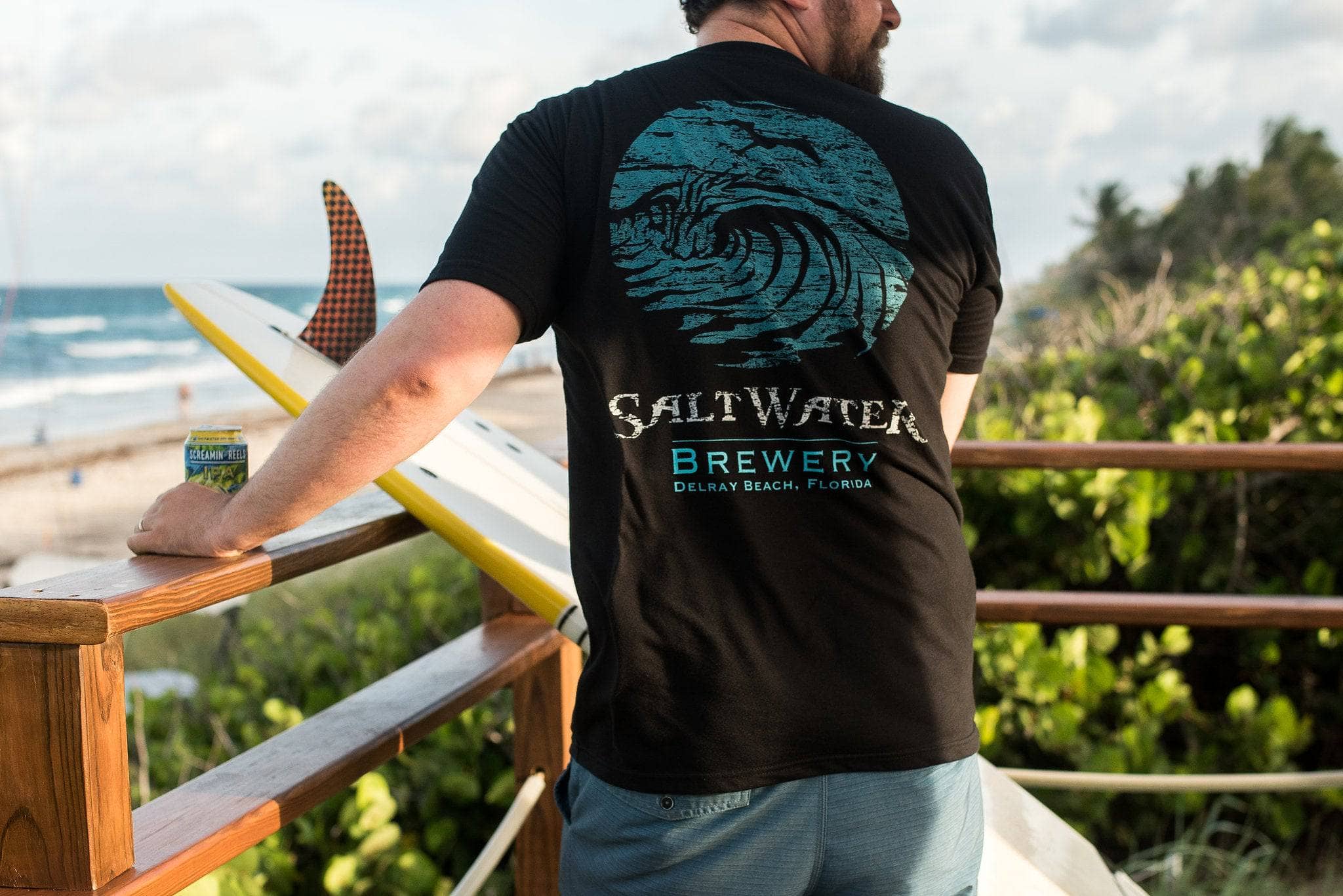
The dune walkover, board in hand — walk the beach early, leave it dark and clear by night. (Our own photo.)
Mid-August is the busiest stretch of the year
Walk any stretch of Palm Beach County sand at first light this month and you will probably find one: a pair of shallow tractor-tread trails running up out of the wash, a churned patch of sand at the top, and a ring of stakes and orange tape around it. That is a sea turtle nest, found and marked by permitted monitors before most of us were awake.
Florida's nesting season runs March 1 through October 31, and the middle of August sits in the thick of it. Late nesting is still going on, and at the same time the nests laid back in the May-to-July peak are starting to break open. Loggerheads nest most often on Delray's beaches, followed by greens and leatherbacks, with the occasional hawksbill or Kemp's ridley. According to Palm Beach County's Environmental Resources Management department, our beaches carry more sea turtle nests per mile than anywhere else in the United States — and by ERM's own count, this one county's sand produces roughly 2,000,000 hatchlings a year. That number sounds invented. It isn't.
Which means what people around here do on an ordinary Tuesday night counts for more than it would almost anywhere else.
Light is the whole ballgame
A hatchling digs its way out of the nest at night with one navigational instinct: head for the brightest, most open horizon. For a few million years that was reliably the ocean, lit by moon and stars. Now it competes with porch lights, pool cages, parking lots and phone screens.
When the artificial light wins, the turtles turn the wrong way. FWC calls it a disorientation, and it is as bad as it sounds — hatchlings crawl inland instead of seaward and are lost to exhaustion, dehydration, traffic or predators before they ever reach the water. The same light turns nesting females around, so a female will abandon a crawl and go back without laying.
Delray Beach wrote this into law in 2014 with Ordinance 11-14. Sea turtles are far less bothered by long-wavelength light, so outdoor bulbs within 600 feet of the beach's high tide line are meant to be yellow, amber or red. If you live in that band, that is not a suggestion. It is also, conveniently, one of the easier problems in the world to solve: it is a light bulb.
Five things that actually help, this month
- Kill the light the beach can see. Through October 31, switch off exterior lights that are visible from the sand, close curtains and blinds after dark, and change any remaining outdoor bulbs within 600 feet of the high tide line to amber, yellow or red. Shielded and aimed down beats bright and aimed out, every time.
- Leave the sand flat and clear. Before you go, fill in the holes you dug and knock the sandcastles down. A hole a toddler climbs out of is a wall to something the size of a bottle cap. Delray asks that chairs, cabanas, tents and toys be moved to the sandy foot of the dune each night — take yours home instead and the beach is that much cleaner.
- Put the flashlight away after dark. No torches, no phone lights, no flash photography on the beach at night. Let your eyes adjust to starlight instead; it takes about ten minutes and it is better anyway. If you do come across a nesting turtle, give her at least 50 feet and stay behind her. It is illegal to handle turtles, eggs or hatchlings — including "helping" one down to the surf.
- Carry out everything, especially food. Leftover scraps and wrappers draw raccoons, crows and ghost crabs, and those are precisely the animals that dig out nests and pick off hatchlings. Old fishing line is worse, because it entangles. There are monofilament recycling bins up and down this coast, and FWC maps them at mrrp.myfwc.com.
- Put one number in your phone. 888-404-3922 is FWC's Wildlife Alert hotline, staffed 24 hours, for any sea turtle that is sick, injured, entangled, dead, or crawling the wrong way. You can also text Tip@MyFWC.com. Report it and let the permitted people handle it — do not pick the animal up, and do not carry it to the water.
If you only do one of those, do the first one. Light is the single largest thing standing between a hatchling and the ocean, and it is the one thing nearly anyone can change tonight for the price of a bulb.
The other thing that ends up in front of them
Once a hatchling gets past the surf line, the next problem is what is drifting out there. A floating plastic bag or a deflated balloon reads, to a turtle, almost exactly like a jellyfish. Six-pack rings are the version of that story we know best: we are the team behind the edible six-pack ring, made from brewing by-products and designed to feed marine animals rather than trap them. It is the reason a lot of people have heard of a small brewery in Delray Beach at all, and both National Geographic and the Palm Beach Post covered it.
We are not going to pretend a beer company solves any of this. But it is why the ocean is in our name, and it is why on a Monday in August we would rather write about turtle nests than about ourselves.
If you are heading out
Hatchling season overlaps almost perfectly with the hottest sun of the year, and the beach walks worth doing are the early ones and the late ones. For a dawn walk that turns into a whole morning, long sleeves beat reapplying sunscreen — our UPF 50+ UV long sleeves are built for exactly that, and they are what most of our crew reaches for out fishing.

The beer garden at 1701 W. Atlantic Ave. Our own photo, our own lot — well inland of the nesting beaches.
When you have finished the walk, the taproom is at 1701 W. Atlantic Ave, the first building off the I-95 Atlantic Ave exit in Delray Beach. Hours are Mon 1–7 · Tue–Thu 12–10 · Fri–Sat 12–11 · Sun 12–8. There is usually a food truck out front, and whatever is on this week is listed on the Reef Room events page. The beer itself is a find-it-around-town thing — Publix and local bottle shops through Palm Beach and Broward counties. We cannot ship beer, so online is apparel and gear only.
Please drink responsibly.
Sources: FWC Sea Turtle Program · Palm Beach County Environmental Resources Management · City of Delray Beach Sea Turtle Conservation Program.